So who is this weirdo?

Hi! My name is Liam and I am a beginner birder living in Glen Massey. I first became interested in birds after a 6-month missions trip to Papua New Guinea in 2016, and my interest grew from there! I am now a member of the Ornithological Society of New Zealand and Young Birders New Zealand (OSNZ and YBNZ respectively ). So now, I'm starting this blog so I can share my birding adventures with anyone who will listen ☺.

Sunday, 17 September 2017

Windy birding up North

I awoke on the morning of the 26th of August to the sound of Tui duelling with Australian Magpies overhead. Tick. Tick. Hurriedly packing my bags I jumped in the car and Dad drove me down to picturesque Ngaruawahia, where Mynas, Starlings and Sparrows all made it onto my day list... I needed these 'plastics' if I was going to beat my personal record of 56 birds in a day. I met up with two other birders, Michael B-S and Russ C, the latter of which I had not previously met. Russ was driver, and on the long road up to Auckland he offered Michael and I an offer we couldn't refuse - the birder who spotted the best bird of the trip would score themselves the excellent (and expensive) Birds of New Zealand: A photographic guide to keep! The rest of the trip we kept ourselves amused with quizzes derived from Aussie and NZ bird guides, and all the while I kept one eye out for the next bird.

In busy, noisy Auckland around 9am, we picked up Harry B, an international twitcher who knew his stuff with a life list of 2000 plus birds. Now fully loaded, we headed north, braving the wind and rain in our search of birds. First stop: the vast Kaipara Harbour, just north of Auckland. On the way, however, Harry's sharp eyes spotted a pair of Cape Barren Geese - extremely rare for this area, and indeed, New Zealand. Not only that, but rare Mute Swans were also there. However, something was definitely wrong. Surely there was no way we would see both these species in one place... then I spotted the Ostrich and Emu in the same paddock, as well as three giraffes further on... Dangit. Definitely not wild then. Some rich collector was having a laugh at our expense!

A quick Subway pit stop, and we headed down the winding gravel roads, forever alert for a sign of the Australian Pelicans that had turned up here in March/April. The pelicans were nowhere to be seen, but we made it to the (now very muddy) vehicle access to Big Sand Island, where instead of risking Russ's new car we got out and readied ourselves for a few hours of birding. Our target species here were the Nationally Critical Fairy Terns, of which there are only 40 left in New Zealand! We were also hoping for some rarer waders, and maybe some surprise tern species. As soon as we got out of the car, a Dunnock revealed itself with a thin, reedy warble. New Zealand Pipits and Skylarks were in good numbers, and once we had walked out to the south end of the island Bar-Tailed Godwits and Wrybill were nice and obvious. Banded and NZ Dotterels were around, and as we got closer to the main flock of birds we saw not one, but SEVEN Fairy Terns! As we were watching these, two Little Terns also terned up (sorry). What happened next was nothing short of a miracle.

Black-Fronted Tern with a Fairy Tern

Terns at Kaipara


Black-Fronted Terns are a small, grey tern species that are found in the braided river systems of the South Island. Occasionally, one or two would turn up to Wellington, and they have been recorded in the Bay of Islands and even sparingly in Auckland. So what happened next was not entirely unprecedented. But undoubtedly no-one was expecting it. Just as we were about to leave the small flock of Fairy and Little Terns, Michael gave a yell, pointing to a bird overhead. And, just like magic, the exquisite, handsome Black-Fronted Tern glided down to land only a few metres in front of us! Tick! This one was a lifer for Michael and I, and one of the most northerly records ever. According to eBird, it was the third most northerly record in history, with the first in the Far North, in 1986, and the second at Langs Beach in 2004. Bird of the trip! Not only that, but now Michael had an almost unshakeable hold of the book Russ had offered...

Elated, we walked to the north end of the island, although we failed to see anything amazing save an albino oystercatcher. The tide was coming in with a vengeance now, and we hastily crossed back over to the mainland (and seeing some pretty cool jellyfish as well), and left Kaipara with a whole lot of birds on the day list, as well as wet shoes :\

Next and final stop for the day was Waipu Wildlife Refuge. The wind had picked up dramatically, with 50km/h winds and even stronger gusts, making conditions ideal for seawatching the east coast. We set up scopes on the beach, and watched daring Australasian Gannets plummet into the violent ocean, but we couldn't see anything else. Then a huge, dark shape appeared offshore, coming out of the fog to fill our scopes. Northern Giant Petrel! This almost albatross-sized seabird was the third lifer of the trip for me, and was a satisfying end to the birding day. We made our way to the bach we were staying at, left our bags and gear there, and went out for dinner. When we came back, I tried to watch the rugby, but I was quickly reminded why I don't like watching rugby, so I went to bed after 5 minutes.

The next morning we were up at 6, scoping out the dam below us for any signs of Australian Little Grebes, but the grebes were too far away for anything definite. Russ learnt that I still hadn't yet ticked Peafowl, so we first headed north to Waipu Caves, where several rather windy Indian Peafowl were running across the road. Cheers Russ, that was quick. We then headed to Ormiston Ponds to see the resident Aussie Little Grebes, and, like magic, they were there. Two lifers and we were just warming up, it seemed. As we headed south, with even stronger winds buffeting the coast, I was met with the crushing revelation that I had left my leftover pizza in the bach fridge. Quickly spiralling into the cold depths of depression, my teammates realised that they had to do something, and fast. So we stopped in Wellesford and I bought a banana, for an amazing 16 cents. Crisis averted.

Pulled out of my pizza-craving stupor by a mixture of carbohydrates, potassium and vitamin B-6, we could continue on our journey. We went on to Ruakaka Wildlife Refuge for another seawatch, but saw only gannets both diving into the rolling ocean, and the less-brave ones taking shelter in the river.

As we moved further south, Harry received a call from Oscar T, a fellow Young Birder, who was very excited to share that he was looking at a Kookaburra! Released by Governor Grey in the 1860's, Laughing Kookaburras never really took off, but were still holding on in the north. This would be a lifer for myself, and a new one for NZ for both Michael and Russ. Naturally, we raced down there as fast as we could  as fast as legally possible, only to find it had flown.

Disappointed, we went down to Tawharanui Regional Park, where we finished the day off with birding in the bush, lagoon and seawatching. Bush birding highlights were the 12 North Island Saddlebacks and 2 North Island Robins, and we saw Brown Teal and Banded Rails in the Lagoon. Seawatching was mostly fruitless, although not vegetable-less, bread-less or indeed bird-less, as we still saw numerous Fluttering Shearwaters and two Northern Giant Petrels.
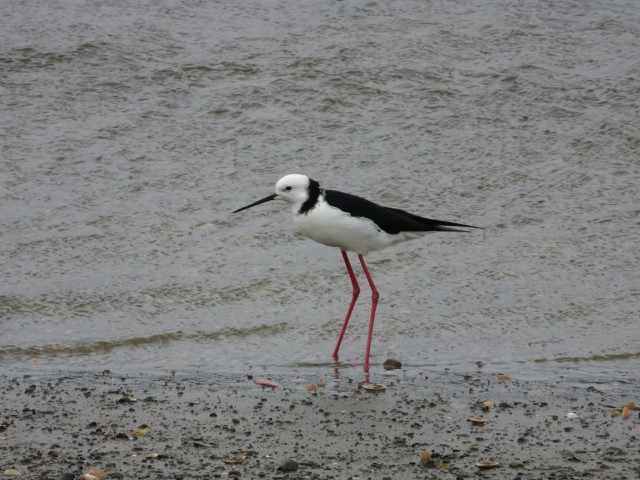
Pied Stilt at the Tawharanui Lagoon


We finished the day with a Grey Teal at Straka's Lagoon, our final 'bogey bird' dealt with. Total count for the weekend was a whopping 74 species, and 5 lifers for me.

Monday, 28 August 2017

New name!

Hey all!
Following my recent trip to Northland and Auckland (post to come), I have renamed my blog, as the previous name no longer fitted. I fully intend to move further and further afield in my never-ending quest for birds, rather than be confined to the Waikato. So, influenced somewhat by recent "dips" out on Black Kites, Cattle Egrets and Australian Shelducks, I have renamed this blog to something more accurate...

Sunday, 20 August 2017

Peat bog slog


Thanks to our nation's wonderful education system, coupled with my own laziness, it has been a while since my last post, and indeed, a while since I've been birding at all. Instead of dealing with the withdrawal symptoms and moving on with my life, I made an impulsive decision last night to head south to Lake Ngaroto to see the migrant cattle egrets that make this lake their home during the winter months. This meant putting all exam study on hold, convincing my parents it was just a "study break", and bracing myself for a concentrated hit of that agonising torture so cleverly disguised as a public transport system. Despite these Herculean trials, I made it to McFalls Road, where the (very friendly, despite my previous rant) bus driver dropped me. I would be on foot from here.

I meandered uphill onto the fittingly named "Lake Road", scanning both sides of the road with my binoculars for a glimpse of the birds. A friend said that they were at a effluent pond on the other end of the road, so that was my first port of call. After a decent trudge, I arrived at the aforementioned poo pond, only to be filled with righteous indignation! These birds had moved! How dare they?

Now feeling quite affronted, I walked to the end of the road and again checked all the paddocks for the egrets, seeing skylarks, yellowhammers, stilts, swallows and plovers, but absolutely no Cattle Egrets. I trekked back to the other end of the road, STILL seeing no species of heron whatsoever, and gave up.

Nursing the deep wound of "dipping", I realised that my bus wouldn't arrive for another 3 hours, I wandered, fairly aimlessly, down State Highway 3 until my (allegedly) sharp eyes spotted a predator-proof fence. Curiosity aroused, I walked down the hill to take a look. Turns out it was Lake Serpentine, which was a predator proofed peat bog. Not only that, but it was free AND had a toilet. I was well and truly convinced and went in.

Considering the time of day, birdlife at the lake was good, with lots of fantails and grey warblers in the bush. The walking tracks were a little bit flooded, so my woefully inadequate trainers turned into sponges, but as I moved around the lake I started ticking off many an interesting bird. A new mallard family started off the walk, and plentiful introduced passerines bulked out my total. Chaffinches, dunnocks and silvereyes were all predictably numerous, as well as skylarks and swallows. A pair of rather irate Spotless Crakes were an unexpected bonus, and a lonely Grey Teal on the lake kept things interesting. I talked to a volunteer checking the tracking tunnels and she said that she has often seen bittern and fernbirds, but today was not my lucky day (as was becoming rapidly apparent!). She told me about the Wetland Trusts plan to reintroduce KIWI to the site, which will be exciting, and she is expecting the other wetland birds to grow in number once they begin breeding at the site.

I had a good 3 hours birding at the lake before I had to leave to wave down a bus (or so I thought...). I walked once more around the lake before heading off, crossing the road and waiting for the bus.

2:10 - No bus. Not entirely unexpected.
2:15 - Still no bus. I've told myself not to worry until 2:20.
2:20 - A definite lack of buses. Slightly concerned. It has also started raining.
2:30 - Now raining heavily. Thanks to a small tree I am getting only slightly saturated.
2:40 - Just saw the bus... going the WRONG WAY. Must have read the timetable wrong. Oh well, any minute now.
3:00 - I am now quite cold, and my trainers seem to have absorbed several times their weight.
3:15 - FINALLY A BUS.

Anyway, after about 80 minutes I dried myself off and typed up this post using the bus WiFi.

EDIT: Thanks to late buses and my own ineptitude, I didn't get home until 5.

That's birding for you.

Saturday, 8 July 2017

Whangamarino Verywetland

Just got back from a pleasant afternoon's birding at Whangamarino with another birder my age, Michael. We started off at my local poo ponds in Ngaruawahia, where we were able to tick the more common waterfowl such as Mallards, Black Swans, Australasian Shovelers and Grey Teal, as well as a whole bunch of easy-to-get passerines (perching birds) and the elegant Pied Stilts. I left the Oxidation Ponds with a total of 30 species under my belt, including some which I'd nabbed earlier in the day on Kereru Road, Glen Massey, such as NZ Bellbird and NZ Pipit. We headed up State Highway 1, and after a little trouble with a stubborn SatNav, we made it to Mangatawhiri.

Ngaruawahia Sewage Ponds


For about 8 months of the year, most birders wouldn't look twice at a place like Mangatawhiri. But interestingly enough, during winter it is home to one of New Zealand's newest species, the Galah. For some reason, every year Galah migrate south from Ponui Island in the Hauraki Gulf to this one spot to feast on the leftover maize stubble after harvesting. They were introduced about 50 years ago, and have really put this tiny village on the map for winter Waikato birdwatchers. Anyway, that was my main target species for the day, so off we went. After fruitlessly scanning the maize fields, we ignored the usual spot and went up Mangatawhiri Rd to the old Castle Cafe. Despite my seeming bird-blindness, Michael spotted three sitting very pretty in a pine tree, and eventually I saw them. Galah was my first and only lifer of the day, while Michael, the more experienced birder, just witnessed my delight at seeing this rare and beautiful bird, number 34 for the day.

My awful photo of a Galah - blame the camera!
After a rubbish photo, we headed south down Falls Road, where we stopped at the lookout right in the south-east corner of the 7200 hectare wetland. Here we checked for bittern and crakes, but the flats below were much too flooded for these cryptic and secretive species. We headed north again to the main Falls Road walkway. Pressed for time, we raced down the path until...prrrp... the soft, bubbling call of the reticent Spotless Crake tickled our ears. Tick. It didn't stop there, and after some coaxing from our recordings we managed to pinpoint at least FIVE crakes all around us! This is a definite high count for me, as previously I had one shaky record from the Whangamarino west ponds. Ears pricked, Michael managed to also pick out a Dunnock singing in the distance, rather special for the Waikato region although I know anyone south of Taupo will be chuckling at this!

The view from the Falls Rd Lookout
Tired and hungry, we headed back home via Island Block Road, and on the way heard our last birds for the day, a few Fernbirds at Coal Bucket Marsh, on the west side of the wetland, leaving us on a respectable 40 species in a few hours of fairly relaxed birding.
The moon rising over the West Ponds

Sunday, 2 July 2017

Trying out new gear at the local poo ponds

After long hours of squinting through 8-power binoculars, of struggling to make out identification marks from 100 metres away, of following the flight of a bird over the ocean only to find it was an insect a few centimetres from my face, it arrived. At last, I had a scope! While it had nothing on the thousand-dollar, sleek, smooth spotting scopes I had dreamed about, this one was mine. It wasn't perfect, but considering the low price tag the Celestron Ultima 80mm was my choice, which I haven't regretted at all.
Of course, it arrived on a Monday, so I had to wait out 5 days of virtual scopelessness before I could try it out. It was worth the wait, though, and I managed to convince my parents to take me down to the Ngaruawahia Wastewater Treatment Plant so I could see how it performed. Naturally, it was windy and raining, and I would have to set it up on lumpy, muddy ground at an angle, so this was a trial by fire for my new scope.
The scope really exceeded my expectations, and I could get a beautifully clear picture even at 60x magnification. Stability was an issue, as was the fence blocking my view, but even at >100m I could see some stunning Australian Shoveler and Grey Teal amongst the more common Mallards. While there weren't any mega vagrants or anything, I managed to bump my NGA WTP life list up to 35, which I was very pleased with. Now all that remains is to convince whoever is in charge of the plant to let me in...
All in all it was a good half hour (before we had to leave), and although the location was hardly exotic it was a good field test for a great budget scope.

Sunday, 28 May 2017

Ngaruawahia to Miranda

Hello everyone! I must confess, I promised an article about my local sewage pond in my last post, but I've been too lazy to actually get around to writing one. However, today's birding, I think, warrants a post. In light of the recent Australian Shelduck sighting at Miranda, me and a few birdnerd friends decided to have a go at 'twitching' this rarity. So to avoid wasting half a day, I got up insanely early (7:30am, because it is a weekend after all) and walked up the road for a bit of a quick bird. I saw almost nothing, as winter has driven the kingfishers and rosellas to warmer places (where I want to be!) and there was no sign of the Sulphur-crested cockatoos. Regardless, it was a nice walk and I still racked up 20 species in 20 minutes, a count not to be sniffed at. Unless, like me, you had a cold, yet another joy of birding in autumn. I left Glen Massey on 23, thanks to a few other birds hanging around the garden, and moved on to the Ngaruawahia Wastewater Treatment Plant (Told you it would get a mention!). I climbed over the gate scouted out the area and saw another few good birds, including lots of black swans, shoveler, Grey Teal and Pied Stilt (New birds for the location). It was still chilly, and by the time I got back in the car I could no longer feel my toes. Oh well. I met up with my friends in Gordonton, and we drove to Kaiaua, briefly stopping at Mangatawhiri to look for Galah (no luck). On to Kaiaua quarry lakes, where we picked up some waterfowl and we had some good *ahem* cormorants by the lake. Along the terribly named "Seabird coast" (It was actually famous for shorebirds) I got my first lifer of the day, Fluttering Shearwater. Laugh all you like, but this 'bogey bird' had been haunting me for months. Everyone seemed to see them in their thousands but me.

Once that loose end had been tied up, we headed down the coast to Ray's rest, where we saw spoonbills, all three gull species, oystercatchers and Banded Dotterels and ate some delicious chips.


Because none of the dotterels were thoughtful enough to turn into Lesser Sand-plovers, we headed further along the coast, to Miranda itself. It was just coming up to high tide, so the birds were pushed up near the hide. About 150 Bar-Tailed Godwits remained on the shellbanks and mudflats, as well as 4 Red Knot, about a thousand Wrybill, one or two NZ Dotterel and a few Banded Dotterel, about 40 Royal Spoonbills. Constant Harriers flying over ensured the birds kept taking to the air, making it hard to count, although I managed a few nice photos of them in flight. Our first spot was the Stilt pools, where a single White Heron (Great Egret for you foreigners :) ) preened itself. Lots of Paradise Shelducks, Black Swans and of course, Pied Stilts. As well as all the usuals we had EIGHT BLACK-TAILED GODWITS! This is a huge number, and they were a lifer for me so I was very pleased. After searching for the Aussie Shelduck with no luck, we moved back to the hide, where we saw one Whimbrel hanging behind the godwits. Tick. A solitary Pacific Golden-Plover brought the count up again, then our time was up and we headed home.

Black-Tailed Godwits among more common birds


Did we see the Aussie Shelduck? Of course not.

Saturday, 6 May 2017

Maungatautari

Hello everyone,
I've just realised my Blogger app failed to post my last thing, which is my excuse for the delay. Not only that, but school has been in full swing and I have had very little time to actually go anywhere interesting. After an almost fruitless holiday yielding one lifer (Helmeted Guineafowl at Taitua Arboretum), I had given up hope on birding over this break. Thankfully, on Monday the 1st of April, Mum was kind enough to take me and my (non-birder) brother to Maungatautari on our teacher only day. So for most of the morning we were walking around in restored native bush inside a predator-proof fence. Despite the relatively late start of 9:30am, the bird life was still pretty good, with tomtits and robins abundant, plenty of stitchbirds that refused to be seen, and a few kaka. My highlights were about 5 saddlebacks in the canopy, which was a new bird for the year, and a falcon duelling with a flock of introduced magpies over the forest. This visit brings my Maunga life list to 27.


A very confiding robin - this was the only usable photo due to lighting

Also, expect a post on the Ngaruawahia Oxidation Ponds, which was the one which failed to send.
Happy birding!